
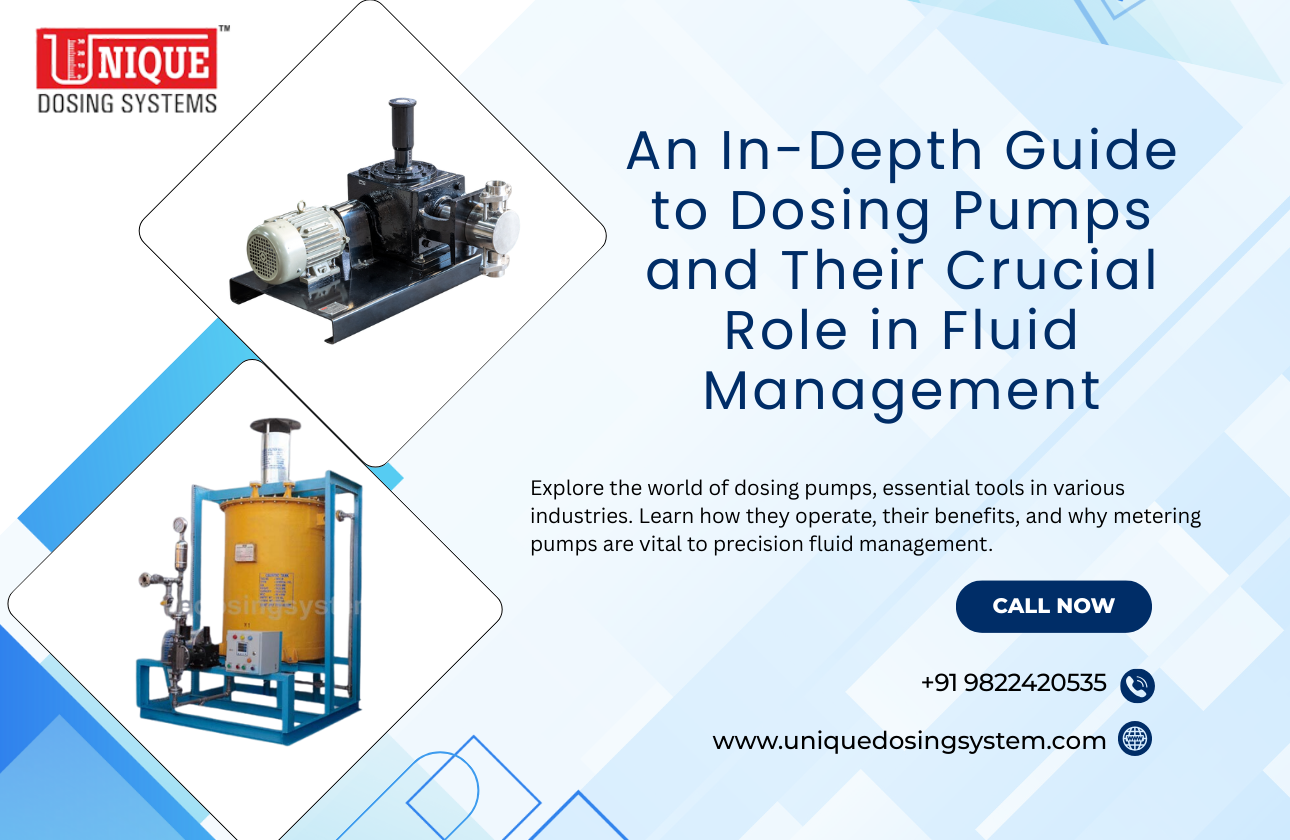
An In-Depth Guide to Dosing Pumps and Their Crucial Role in Fluid Management
Dosing pumps, also known as metering pumps, are integral components in a wide array of industries, from water treatment and food processing to pharmaceuticals and chemical manufacturing. These precise and reliable devices are designed to move precise volumes of fluids in controlled intervals, making them indispensable for operations requiring exact fluid management.
What are Dosing Pumps?
Dosing pumps are specialized positive displacement pumps that inject a measured amount of liquid into a process system. This could be for the purpose of treating water, neutralizing acidity, or adding flavorings or chemicals. Their remarkable precision and ability to handle aggressive, viscous, and corrosive fluids set them apart from regular pumps.
How Do Dosing Pumps Work?
The operation of a dosing pump is based on its ability to move specific volumes of fluid within a set period. These pumps include components like the motor, pump head, diaphragm, and a control panel. The control panel adjusts the flow rate and timing, ensuring that the exact amount of liquid is dispensed regardless of the solution’s viscosity or temperature.
Types of Dosing Pumps
There are several types of dosing pump, each suited for different applications:
- Diaphragm Pumps: These use a diaphragm, pistons, and valves to move fluids, and are ideal for handling slurry or shear-sensitive liquids.
- Peristaltic Pumps: Operating through the compression of a flexible tube, these are perfect for sterile processes requiring no contamination of the liquid.
- Piston Pumps: Known for delivering higher pressures, these are often used in applications that require strong force and pressure delivery.
Benefits of Using Metering Pumps
The use of metering pumps, or dosing pumps, provides numerous advantages:
- Precision: Metering pump excel in accurate fluid delivery, ensuring process consistency.
- Versatility: They can handle a wide range of fluid types, making them versatile for different chemical processes.
- Efficiency: Designed for high performance, they maximize the productivity of industrial operations.
- Safety: These pumps reduce the risks of human error with automated operation capabilities.
Applications of Dosing Pumps
The applications of dosing pumps span numerous sectors:
- Water Treatment: Used for accurately dosing chlorine or antiscalants in water treatment processes.
- Food and Beverage: Essential for adding precise flavors, colorants, or preservatives to products.
- Pharmaceuticals: Employed in delivering exact chemical mixtures for drug manufacturing.
- Agriculture: Used in injecting fertilizers and nutrients for crop management.
Conclusion
In conclusion, dosing pumps play a crucial role in efficient and effective fluid handling across industries. Their ability to deliver precise, repeatable Metering pump of liquids makes them invaluable in maintaining process integrity. As technology advances, these pumps continue to evolve, providing even greater accuracy and efficiency for industrial processes. Understanding the mechanics and applications of dosing pumps will allow businesses to improve their operations significantly.