
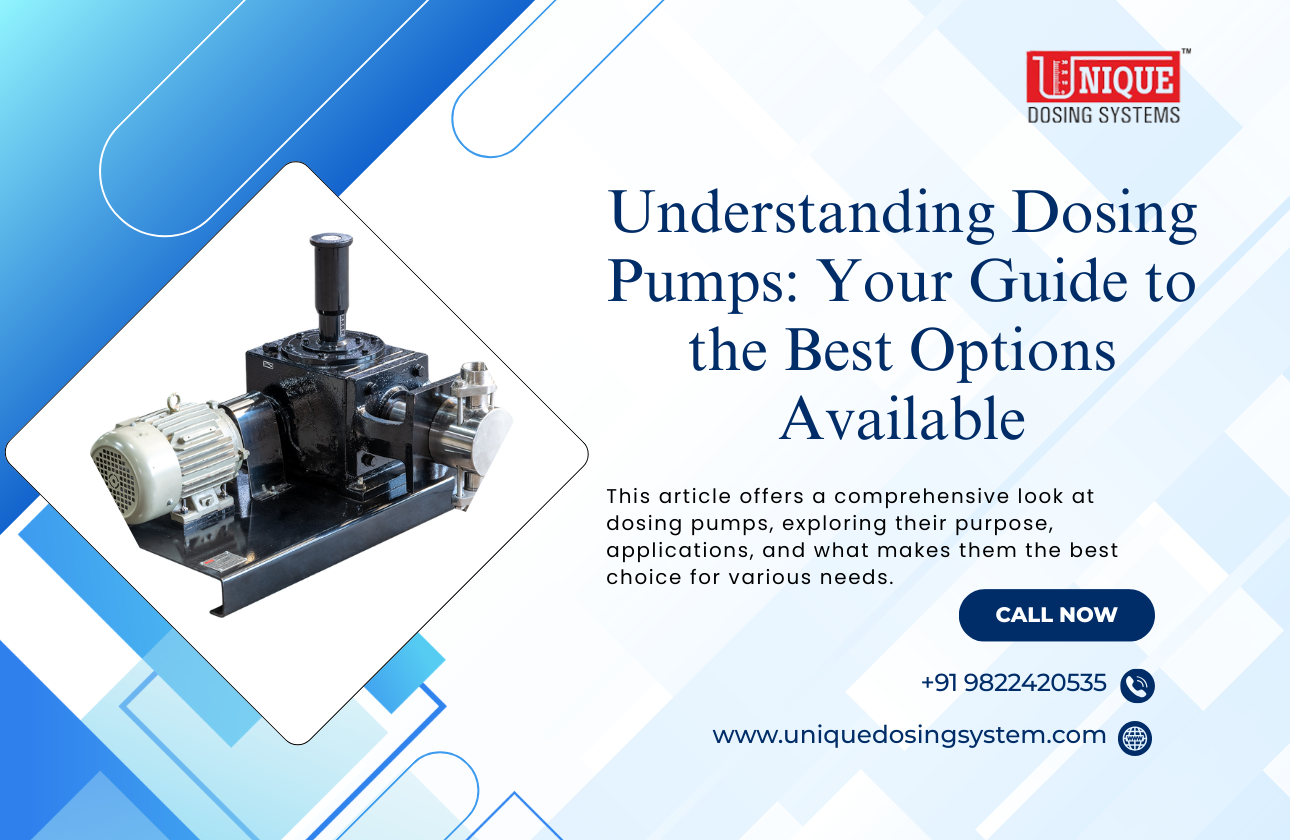
What is a Dosing Pump?
Dosing pumps are devices used to inject a precise amount of liquid into a process or system. They're often used in industries like water treatment, food processing, and chemicals. The main job of a dosing pump is to ensure that the right amount of fluid is delivered at the right time. The pump often works by drawing a specific volume of liquid from a container, determining its flow rate, and then adding it to another container or system.
How Does a Dosing Pump Work?
The working principle of a dosing pump is quite simple. It takes in fluid through an inlet and sends it out at a controlled rate through an outlet. Most dosing pumps are positive displacement pumps, meaning they move fluid by trapping a fixed amount and then forcing (displacing) that trapped amount into the discharge pipe. These pumps are incredibly accurate, making them ideal for processes that require precise dosing, such as chemical injections and pH control.
Why are Dosing Pumps Important?
Dosing pumps play a pivotal role in maintaining the efficiency and safety of various industrial processes. They ensure that the right amount of chemicals or additives are always used, reducing waste and improving product quality. In water treatment plants, for instance, dosing pumps add chlorine or other disinfectants to keep water safe. In the food industry, they help maintain consistent flavors by carefully measuring out additives. Their ability to automate processes also means lower operational costs.
Types of Dosing Pumps
There are several types of dosing pumps to choose from, each suited for different applications. Diaphragm dosing pumps use a diaphragm made of elastomeric material and are very accurate and widely used. Piston dosing pumps use a piston to pump low to medium viscosity fluids under high pressure. Peristaltic pumps are great for low-pressure applications and are often used in scenarios where the fluid must stay sterile. Understanding which type best suits your needs is crucial for efficient operation.
Applications of Dosing Pumps
Dosing pumps find applications across a wide range of industries. In the chemical industry, they are used for processing acids, bases, and solvents. In agriculture, dosing pumps help in dispersing fertilizers and pesticides. The pharmaceutical industry uses dosing pumps for precise dispensing of medicinal ingredients. These pumps are also a must in water treatment facilities where they are used for disinfection and filtration processes, ensuring we have access to clean, potable water.
How to Choose the Best Dosing Pump
Choosing the best dosing pump for your application involves considering several factors. Begin by assessing the type of fluid you will pump, its viscosity, and the pressure it needs. The pump material should be compatible with the fluid to prevent corrosion. Consider the dosing rate and volume the pump must handle. It's also good to check for energy efficiency and ease of maintenance. The right pump should meet all your application needs while being easy to operate and reliable for long-term use. You can look into the best dosing pump options available today from reputable manufacturers.
Advantages of Using a Dosing Pump
One of the primary advantages of using a dosing pump is its accuracy. Whether you need to pump small or large amounts, these pumps can be finely tuned for precise operation. This accuracy translates into cost savings as you’ll only use the exact amount of liquid needed, eliminating waste. Dosing pumps offer reliable performance even in challenging environments. Automated systems reduce the need for human intervention, which lowers labor costs and minimizes errors.
Frequently Asked Questions
1. What maintenance do dosing pumps require?
Answer: Regular maintenance is crucial for dosing pumps. This includes checking for leaks, replacing worn parts, and ensuring calibration is accurate. A well-maintained pump ensures efficient and consistent dosing.
2. Can dosing pumps handle viscous fluids?
Answer: Yes, certain types of dosing pumps, like piston pumps, are designed to handle viscous fluids effectively. It’s essential to choose a pump suitable for the fluid’s viscosity.
3. Are dosing pumps energy efficient?
Answer: Dosing pumps are generally energy efficient, particularly those designed for continuous operation. Their efficiency can be further optimized by selecting the right size and type for your needs.
4. How do I determine the correct dosing pump size?
Answer: To determine the correct size, consider the flow rate, pressure, and volume required for your application. Consult with manufacturers or experts who can help assess your needs accurately.
5. Can a dosing pump be used for solids?
Answer: Dosing pumps are primarily designed for liquids. However, some models can handle low concentrations of solid particles, but it's crucial to verify compatibility with your specific application.