
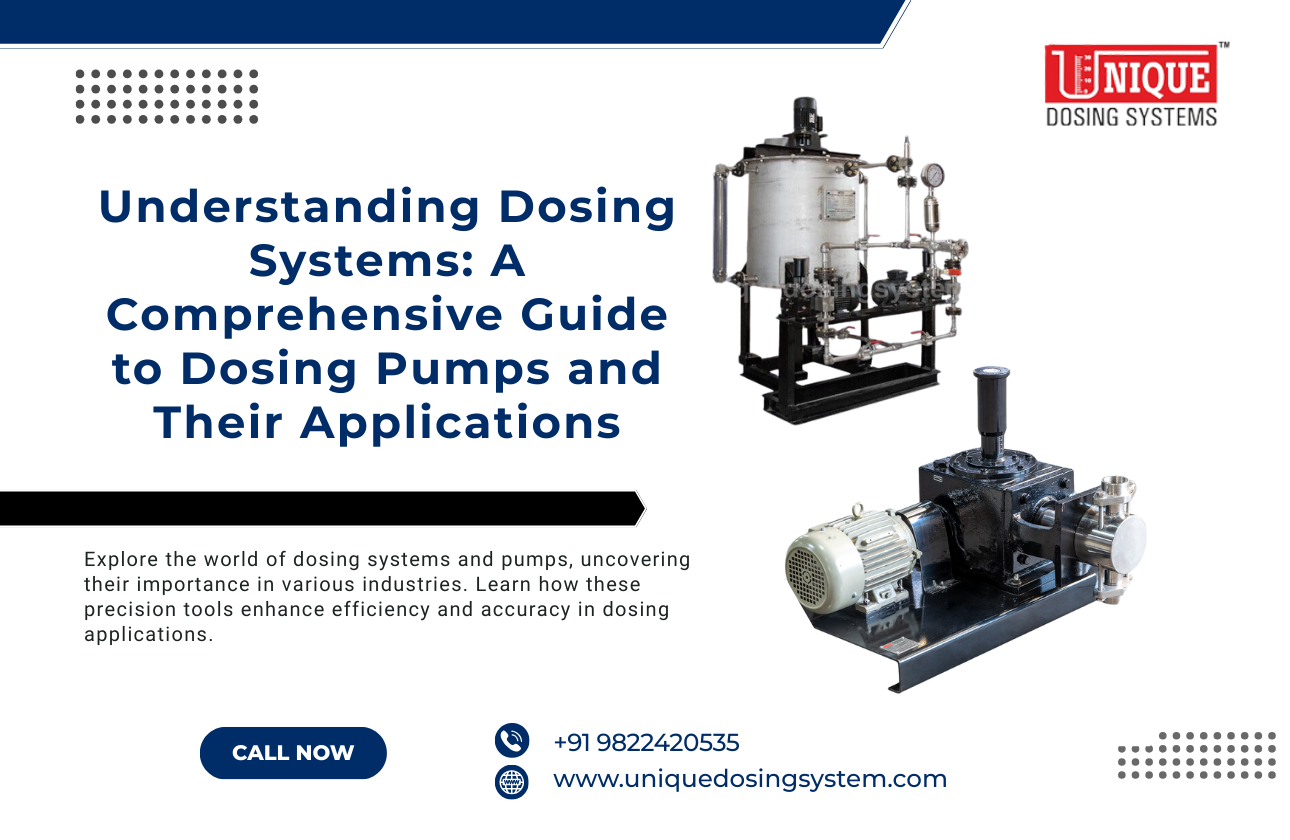
Understanding Dosing Systems: A Comprehensive Guide to Dosing Pumps and Their Applications
The modern industry requires precise operations, and dosing systems play a crucial role in achieving this precision. Used across a variety of sectors, such as water treatment, pharmaceuticals, and food and beverage production, dosing systems ensure accuracy and efficiency when introducing specific quantities of substances into production processes.
What is a Dosing System?
A dosing systems is a coordinated set of devices designed to introduce precise amounts of a substance into a process or product. The core component of these systems is the dosing pump, which serves to deliver accurate volumes of liquid, gas, or slurry.
The Importance of Dosing Pumps
Dosing pump are pivotal to a dosing system's effectiveness. They are engineered to handle fluids of varying viscosities and are indispensable in maintaining the proportionality and uniformity of mixtures in applications. Whether it’s adding chemicals to a water processing facility or infusing flavors in food production, the reliability of dosing pumps ensures both quality control and compliance with industry standards.
Types of Dosing Pumps
- Diaphragm Dosing Pumps: Operate by using a diaphragm to pump the fluid, known for their accuracy and excellent safety profiles.
- Peristaltic Dosing Pumps: Use rollers to squeeze a fluid-containing tube, minimizing contamination risk and perfect for delicate mixtures.
- Piston Dosing Pumps: Offer high pressure and precision, suitable for demanding applications.
Applications of Dosing Systems
Dosing systems find applications in numerous sectors:
- Water Treatment: Ensuring the precise addition of chemicals for disinfection and purification.
- Pharmaceuticals: Critical in producing consistent quality medication, maintaining the accuracy of ingredient mixtures.
- Food and Beverage: Essential for flavoring, coloring, and Dosing pump preserving ingredients in products.
Benefits of Using Efficient Dosing Systems
Implementing top-quality dosing system results in substantial benefits, including:
- Enhanced Efficiency: Automates the dosing process, reducing labor costs and human error.
- Cost-effectiveness: Precise dosing minimizes waste, ensuring optimal use of materials.
- Safety: Reduces risk by accurately managing the handling of potentially hazardous substances.
Conclusion
The deployment of dosing system and pumps is integral to modern industrial processes requiring precise measurement and handling of materials. Understanding and choosing the right dosing pump for your specific application can result in significant improvements in process efficiency, product quality, and operational safety.
By integrating advanced dosing systems, industries can look forward to enhanced productivity and compliance with strict regulatory standards, maintaining competitiveness in today's technology-driven market.