
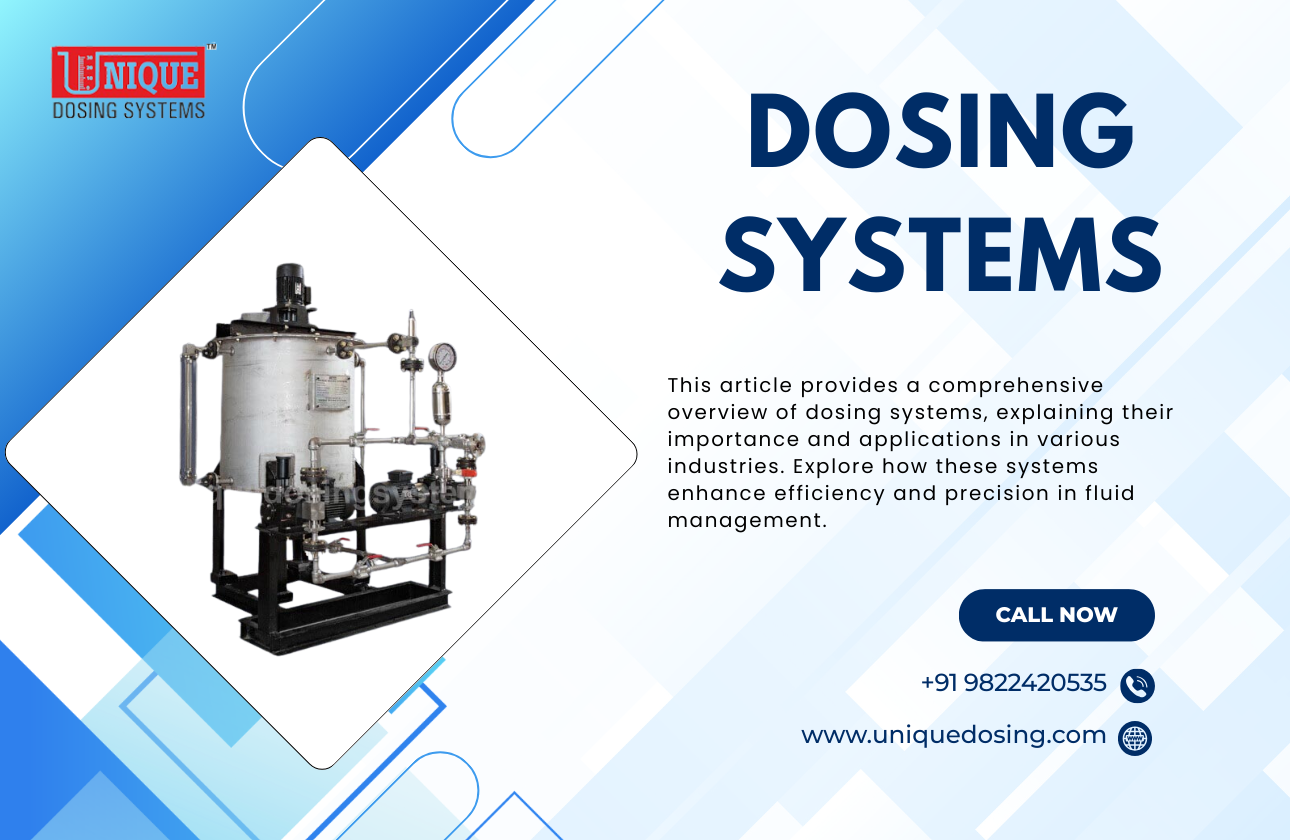
Introduction to Dosing Systems
Dosing systems play a crucial role in industries where precise fluid control is needed. These systems help in the accurate delivery of liquids, gases, or chemicals in specified amounts, ensuring efficiency and safety. They are commonly used in industries like pharmaceuticals, water treatment, and food processing to maintain product quality. Dosing systems are vital in modern manufacturing processes where precision is non-negotiable.
How Dosing Systems Work
Dosing systems operate by measuring and dispensing the exact amount of fluid required in a particular process. They usually include components like pumps, control units, and sensors. The pump pushes the fluid, while the control unit ensures the correct volume is dispensed. Sensors monitor the process and make adjustments as needed. This operation helps maintain consistency, which is especially vital in industries dealing with sensitive chemical mixtures.
Types of Dosing Systems
There are several types of dosing systems designed to meet different industrial needs. Volume-based dosing systems dispense a fixed volume of liquid, whereas time-based systems are set to release fluids for a specific duration. Gravimetric dosing systems use weight as the measure, and these are especially common in processes where precision is critical. Choosing the right type of system depends on your industry requirements and the nature of the liquids you handle.
Applications in Various Industries
Dosing systems are extensively used across various industries. In water treatment, they ensure the accurate addition of chemicals like chlorine for disinfection. In the food and beverage industry, they help maintain product consistency by regulating flavor additives and other ingredients. Meanwhile, in the pharmaceutical sector, dosing systems are essential for delivering precise quantities of active ingredients, ensuring both efficacy and safety in medications.
Benefits of Using Dosing Systems
The primary benefit of employing dosing systems is improved accuracy and reliability. They minimize the risk of human error, enhance production speed, and reduce waste. Additionally, they ensure consistent quality and compliance with safety standards. By automating the dosing process, companies can also cut down on labor costs and increase operational efficiency.
Choosing the Right Dosing System
Selecting a suitable dosing system requires consideration of several factors. These include the type of liquid being dosed, the required accuracy, and the compatibility with existing equipment. It’s also essential to consider the ease of maintenance and the potential need for system upgrades in the future. For more insights on choosing the right dosing setup, visit this guide.
Maintenance and Troubleshooting
Regular maintenance is key to ensuring the longevity and performance of dosing systems. This includes routine checks of pumps, sensors, and other components. Troubleshooting common issues, such as blockages or inaccurate dosing, as soon as they arise, can prevent more significant system failures. Proper training for staff members on both operation and maintenance is also crucial in maintaining system efficiency.
Frequently Asked Questions
1. What is a dosing system?
Answer: A dosing system is a setup that accurately measures and dispenses liquids, gases, or chemicals in precise amounts for various industrial applications.
2. Why are dosing systems important in industries?
Answer: Dosing systems are important because they ensure precision and consistency in the delivery of liquids, which is crucial for maintaining the quality and safety of products in industries like pharmaceuticals and food processing.
3. What are the types of dosing systems?
Answer: The main types are volume-based, time-based, and gravimetric dosing systems. Each type is selected based on specific industry needs and the nature of the fluids being dosed.
4. How do you maintain a dosing system?
Answer: Regular maintenance involves checking components such as pumps and sensors and addressing any issues like blockages or inaccurate dosing promptly. Proper staff training is also essential.
5. How to choose the right dosing system?
Answer: Choosing the right system depends on the types of fluids you handle, the required precision, system compatibility, and maintenance needs. Consider consulting expert guides to make informed decisions.