
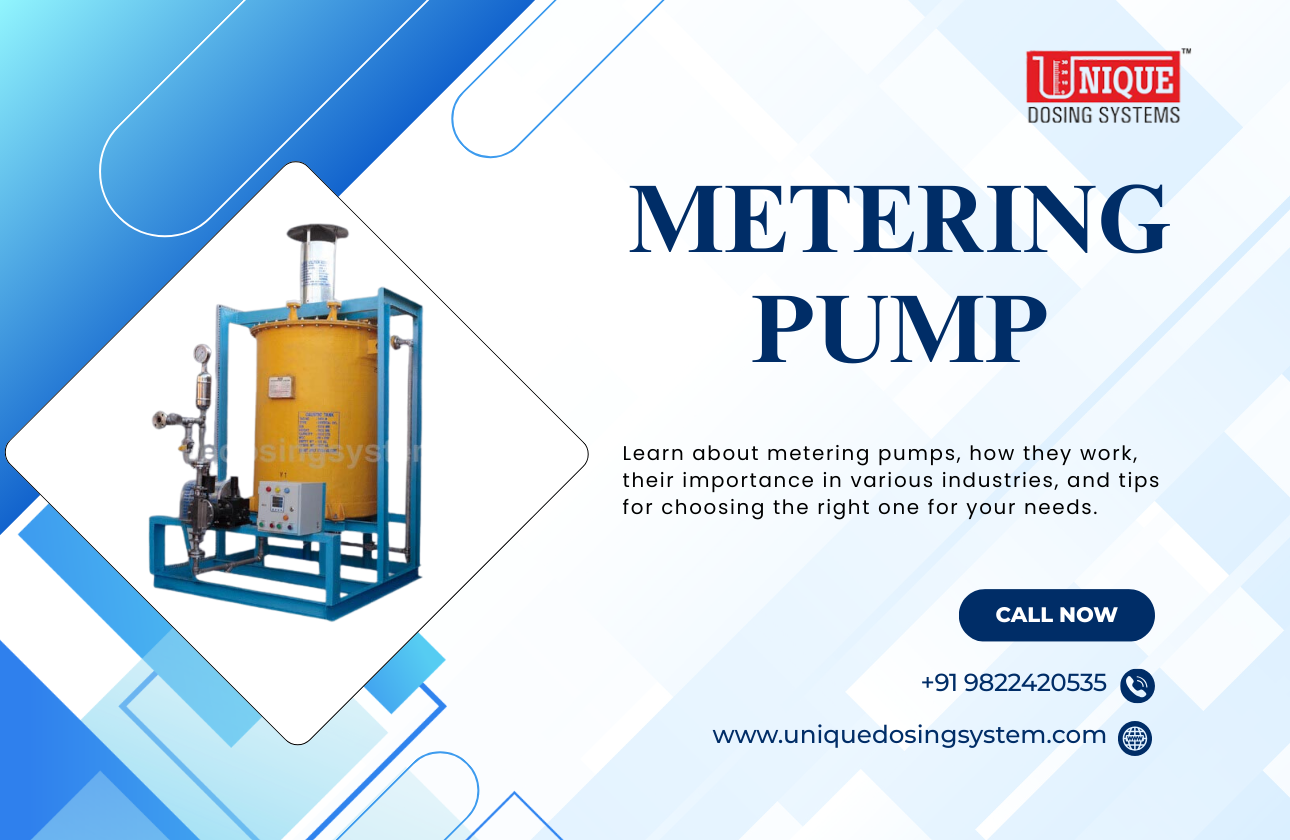
Introduction to Metering Pumps
Metering pumps are essential tools used in a variety of industries to handle precise fluid control. They are designed to move liquids with high accuracy, making them ideal for applications where exact amounts of liquid are necessary. From chemical processing to water treatment, metering pumps ensure that fluids are delivered at the right rate, time, and pressure.
How Metering Pumps Work
The operation of a metering pump is straightforward yet highly efficient. These pumps use a mechanism that moves the liquid through a chamber at a controlled speed. This control is achieved through adjustments in stroke length or frequency. Each stroke dispenses a specific amount of liquid, making the entire process highly controlled. This feature allows these pumps to be reliable in adding chemicals in precise amounts, ensuring consistency and safety in processes.
Applications of Metering Pumps
Metering pumps are versatile and used extensively in industries like agriculture, pharmaceuticals, and wastewater treatment. In agriculture, they help in distributing fertilizers and pesticides accurately to ensure optimal plant growth. In pharmaceutical production, these pumps provide precise dosing of ingredients crucial for adhering to strict quality standards. Similarly, in wastewater treatment, metering pumps deliver chemicals for neutralizing harmful elements, proving pivotal in maintaining clean environments.
The Importance of Metering Pumps
The role of metering pumps is significant as they allow for the safe and efficient handling of chemicals. By providing precise control over fluid dispersion, these pumps minimize waste and ensure that each process runs smoothly without unexpected errors or costs. Their precise nature leads to more efficient operations, which can result in cost savings and enhanced product quality.
Choosing the Right Metering Pump
Selecting a metering pump involves considering factors like flow rate, pressure, and the properties of the fluid to be pumped. It's crucial to match the pump specifications with the application's needs to ensure optimal performance. Evaluating these details will lead to a more tailored solution that enhances process efficiency and reliability. For an expertly guided choice, exploring resources such as comprehensive guides on metering pumps can be invaluable.
Frequently Asked Questions
1. What is the main function of a metering pump?
Answer: The main function of a metering pump is to precisely control the flow of fluids within a system. This accuracy is critical in processes that require specific amounts of chemicals to be dispersed, ensuring both efficiency and safety.
2. Can metering pumps handle different types of fluids?
Answer: Yes, metering pumps are designed to handle a wide range of fluids, including corrosive and viscous liquids. However, selecting the right materials for the pump's construction is important to ensure compatibility with the fluid being dispensed.
3. Why are metering pumps vital in wastewater treatment?
Answer: In wastewater treatment, metering pumps are vital because they accurately add chemicals that help treat and neutralize contaminants. This precision is necessary to maintain safe and clean water conditions, complying with environmental regulations.
4. How do you maintain a metering pump?
Answer: To maintain a metering pump, regular inspections and cleanings are essential. Checking for wear and tear on the components, ensuring seals are intact, and calibrating the pump frequently can extend its lifespan and performance efficiency.
5. What considerations should be made when installing a metering pump?
Answer: When installing a metering pump, you must consider its location, ensuring easy access for maintenance and inspection. The pump should be compatible with the system's pressure requirements and be installed on a stable surface to prevent vibrations that could affect its accuracy.