
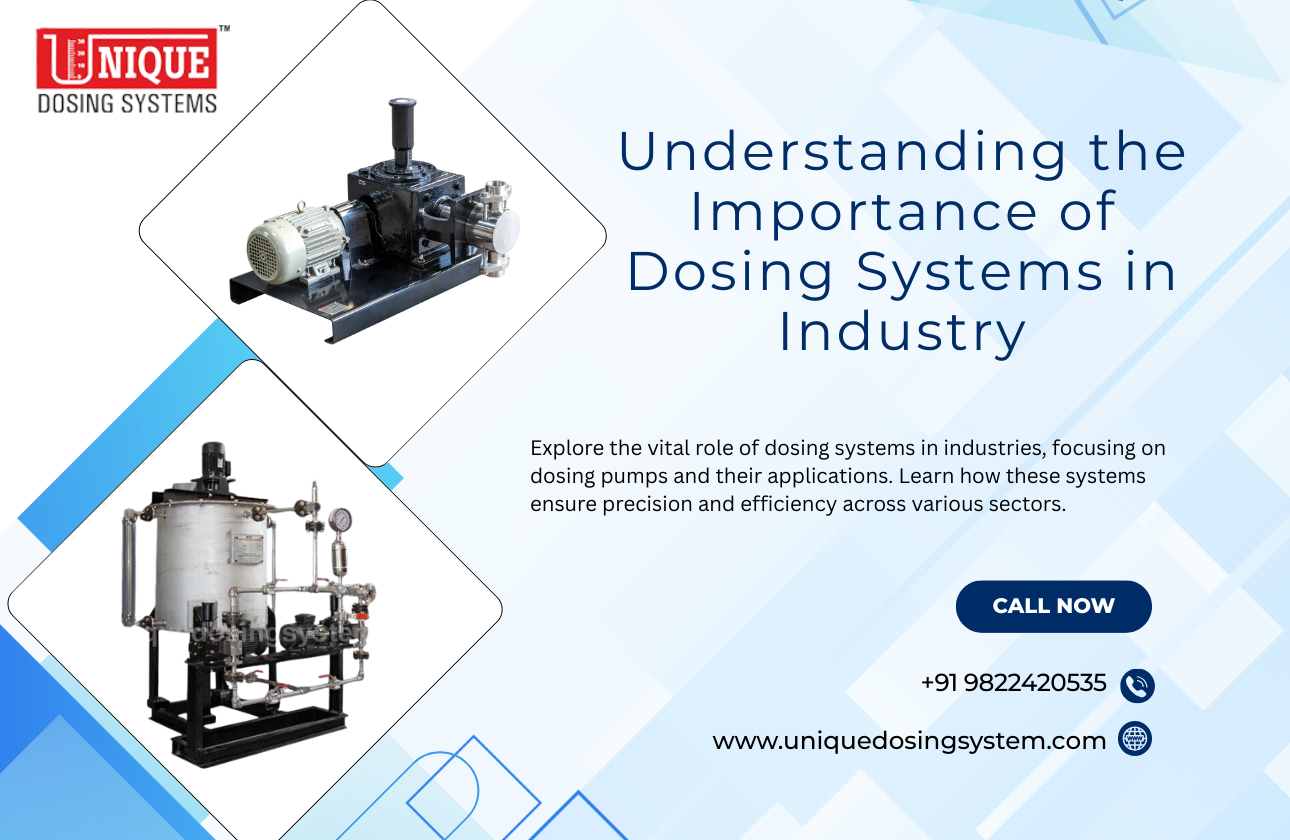
Dosing Systems: Precision and Efficiency in Industrial Processes
Dosing systems are integral to numerous industrial processes, ensuring precise measurement and delivery of fluids across sectors such as water treatment, agriculture, and manufacturing. These systems often rely heavily on dosing pumps to deliver exact quantities of liquids, which is crucial for maintaining quality, safety, and efficiency in production.
What Are Dosing Systems?
A dosing systems is a combination of components that are used to introduce a substance into a system or process. This substance can be a liquid, slurry, or even a powder, but it is typically a precise quantity of a liquid chemical or additive. The core function of a dosing system is to deliver this substance consistently and accurately, which is why it plays a critical role in various technical setups.
Components of a Dosing System
The primary component of any dosing system is the dosing pump, which is designed to move a specific fluid volume at an exact flow rate. Other components may include control units, storage tanks, and measuring devices. These components work in harmony to provide the precise dosing required for the application.
Dosing Pumps
A dosing pump is a small, positive displacement pump that is designed to pump a very precise flow rate of a chemical or other substance into a system. Dosing pumps are often air-operated or use an impeller mechanism for operation, although other types are available.
Applications of Dosing Systems
Water Treatment
In water treatment, dosing system are used to add chemicals such as chlorine or coagulants to water supplies to ensure safety and compliance with health standards. Precise dosing ensures that chemicals are used efficiently without waste or potential health hazards.
Agriculture
In agriculture, dosing system help in the correct application of fertilizers and pesticides. This precision ensures minimal wastage and helps in conserving resources while maximizing yield.
Manufacturing
In manufacturing, precise dosing systems can be critical in ensuring product consistency and quality, particularly when dealing with food, pharmaceuticals, and chemical production.
Why Precision Matters
Precision in dosing is critical not only for product quality but also for cost efficiency and environmental conservation. Over-dosing or under-dosing can lead to significant problems such as resource wastage, environmental harm, and impaired product quality.
Conclusion
Overall, dosing systems play a fundamental role in the controlled and efficient execution of industrial processes. Ensuring that these systems function accurately involves understanding their components, especially dosing pumps, and their application nuances. As technology evolves, so do the capabilities and precision of dosing systems, promising even greater efficiencies and accuracy in the future.