
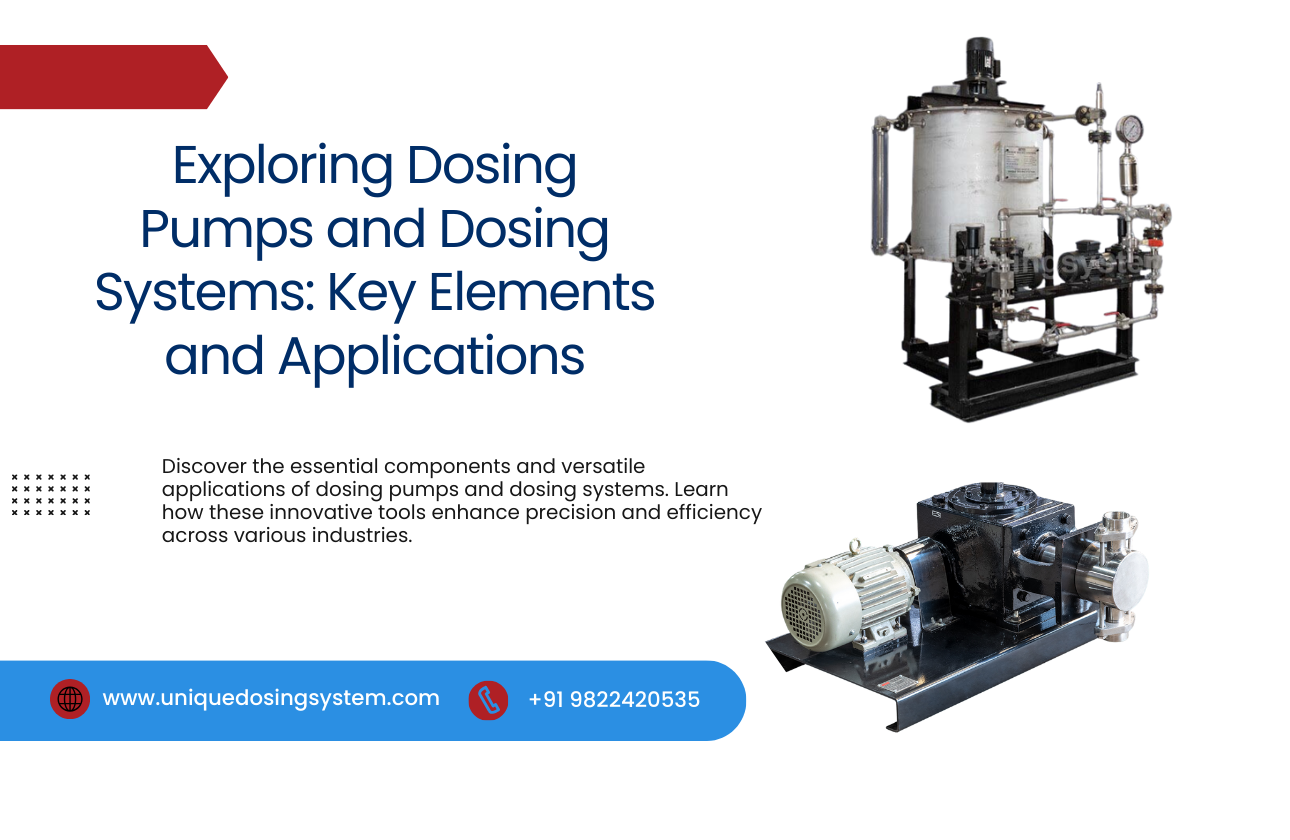
Exploring Dosing Pumps and Dosing Systems: Key Elements and Applications
In today's competitive industrial landscape, precision and efficiency are more crucial than ever. This is especially true in industries that rely heavily on the accurate dispensing of materials. Enter dosing pumps and dosing systems: essential tools engineered to deliver precise amounts of fluid into a system or process. This article delves deep into these powerful components, unveiling their importance and applications across various sectors.
Understanding Dosing Pumps
Dosing pumps are specialized devices designed to move a specific volume of liquid within a given time frame. Typically small, these pumps are remarkably efficient for delivering precise flow rates. Commonly operated by electric motors or air actuators, dosing pumps are capable of handling a wide range of fluids, from water and chemicals to viscous oils or corrosive substances.
Key features of dosing pumps include:
- Accuracy: Capable of handling even the smallest incremental amounts of fluid, ideal for operations requiring high precision.
- Versatility: Useful across multiple industries, including pharmaceuticals, food and beverage, and water treatment.
- Durability: Constructed to withstand adverse conditions and rigorous use, ensuring longevity and reliable performance.
Dosing Systems and Their Components
While a dosing pump is a standalone unit, when integrated into a dosing system, its potential is multiplied. Dosing systems encompass the pump as well as supplementary components like sensors, control panels, and storage tanks that work cohesively to automate and manage the dosing process.
Typical components found in dosing systems include:
- Control Panels: Enable real-time monitoring and adjustments for precise control over dosing operations.
- Sensors: Ensure system safety and efficiency by detecting fluid levels, flow rates, and potential leaks.
- Storage Tanks: Hold the chemicals or fluids to be dosed, providing a stable supply for the operations.
Applications of Dosing Systems
Dosing systems prove invaluable across various sectors, serving diverse purposes with utmost accuracy and efficiency:
1. Water Treatment
One of the most significant applications of dosing systems is in water treatment facilities. Whether for purifying drinking water or processing wastewater, dosing systems ensure precise chemical dosing to maintain water quality standards.
2. Food and Beverage Industry
In the food and beverage industry, maintaining flavor consistency and quality assurance is paramount. Dosing system achieve this by guaranteeing accurate ingredient measurements, enhancing product quality and reducing waste.
3. Chemical Manufacturing
Chemical production often requires careful handling of substances, where the accurate dispensing of chemicals is crucial for product safety and quality. Dosing pumps and systems offer the precision required for this task, minimizing human error and risk.
Conclusion
Dosing system are indispensable in today's fast-paced industrial environment, offering precision, automation, and reliability to processes that demand exactness. As technology continues to advance, these tools will become even more integral, driving improvements in efficiency and innovation across industries.