
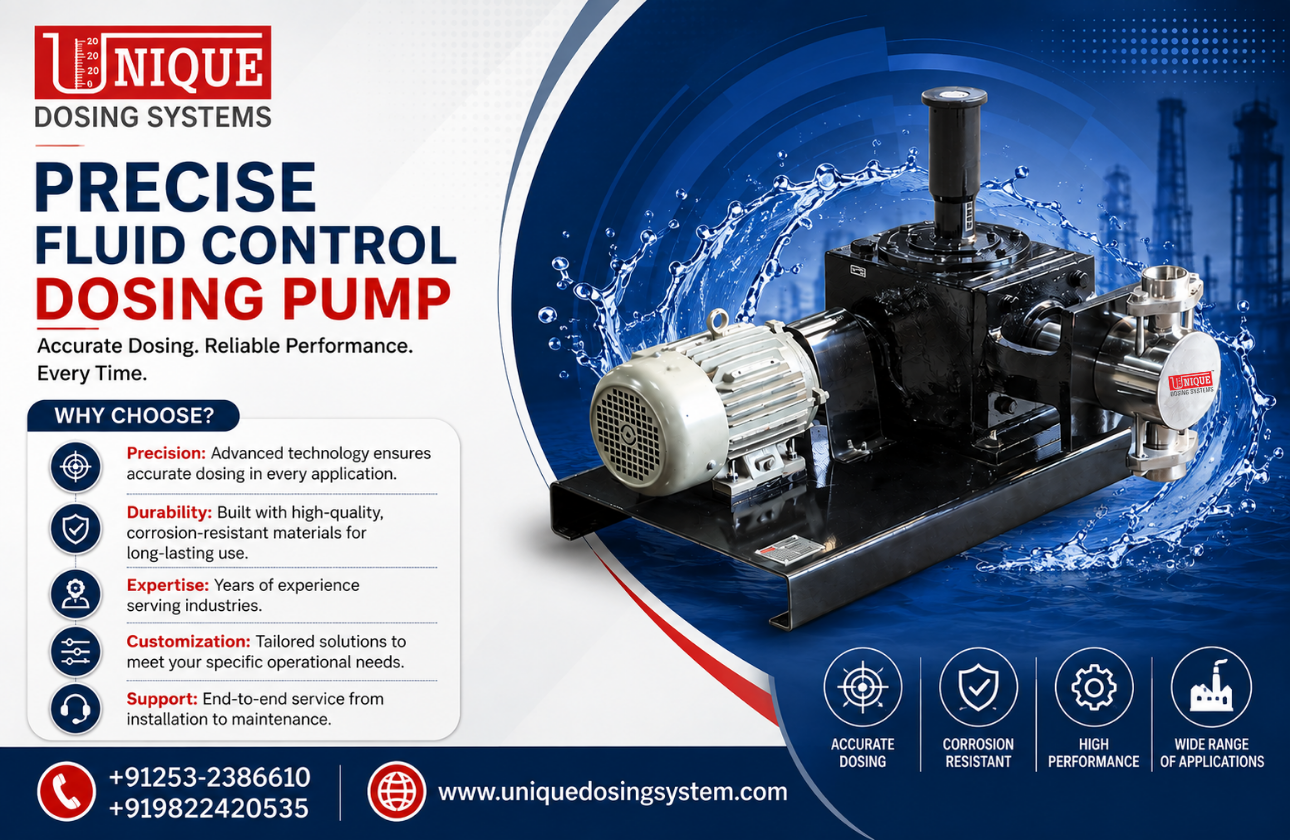
What is a Dosing Pump?
Dosing pumps are simple yet crucial devices in various industries. Designed to deliver precise volumes of liquid, they help maintain the right balance in processes such as water treatment, chemical processing, and food production. By controlling flow rate and pressure, these pumps ensure the addition of exactly the right amount of chemicals or nutrients. Imagine them as the kitchen scales of the industrial world, perfecting recipes to keep everything running smoothly. They vary in size and design but all share the same essential role of maintaining accuracy and consistency in dosing applications.
How Do Dosing Pumps Work?
At their core, dosing pumps are precisely engineered devices that move a set volume of liquid at set intervals. They comprise several components such as a control system, motor, pump head, and a reservoir for the dosing liquid. Often, more advanced pumps allow adjustments for specific flow rates to match the desired dosing amount. The control system can range from a basic manual setup to a sophisticated computer-controlled device that adjusts the flow in real-time. Their precision can be critical in applications like pharmaceuticals where dosing needs to be incredibly accurate to prevent adverse effects.
Types of Dosing Pumps
There is a variety of dosing pumps to choose from depending on your specific needs. Diaphragm pumps are common, known for their ability to handle highly viscous liquids. Then there are peristaltic pumps, which are gentle and ideal for shearing-sensitive liquids. Likewise, there's a piston pump for high-pressure dosing. Knowing the right type required for your application is essential, as it can affect both the efficiency and cost-effectiveness of your process.
Applications of Dosing Pumps
Dosing pumps are vital across many sectors. In agriculture, they help in the fertilization of fields with precise nutrient distribution, ensuring plants get what they need to grow optimally. Water treatment plants utilize dosing pumps to introduce cleaning agents like chlorine into water supplies accurately, protecting public health. Moreover, the food and beverage industry ensures that flavorings and preservatives are consistently added, maintaining product standards and taste integrity. Their adaptability and accuracy make dosing pumps indispensable in these diverse fields.
Choosing the Right Dosing Pump
Choosing the best dosing pump depends on several factors. First, understand the liquid you’re working with. For instance, highly corrosive chemicals require a pump made from resistant materials. Next, consider the required flow rate and the system’s pressure level. The ease of maintenance and operation is also crucial, especially if the pump is located in a hard-to-reach area. By comprehending these elements, you make informed choices and avoid costly mistakes. Consider reading expert guides for deeper insights.
Best Practices in Using Dosing Pumps
To maximize your dosing pump’s lifespan, install it correctly—a stable and secure location is key. Regular maintenance checks help identify wear and tear promptly, minimizing downtime. Always use compatible materials both in the pump construction and the tubing to prevent degradation. Another tip is to ensure the dosing pump is calibrated accurately. Opt for simple yet robust systems to decrease the likelihood of malfunctions. For guidance on best practices, consult resources like user manuals or follow industry standards.
Technological Advancements in Dosing Pumps
The world of dosing pumps is continually evolving. Modern advancements have introduced smarter pumps capable of auto-calibration and remote monitoring. Features like IoT integrations mean these pumps can now provide real-time data back to central operations to improve efficiency and decision-making. Such developments help streamline industry processes, enhancing both production quality and safety. For those in need of more precise dosing, looking into advanced metering pumps could be worthwhile.
The Cost of Dosing Pumps
While purchasing the ideal dosing pump, the cost is always a consideration. Pricing varies greatly depending on the features and materials used. High-quality, robust pumps with advanced features will naturally be more expensive but often prove to be worthwhile investments in their operational lifespan and reliability. Balancing the initial expense with long-term payoffs, such as energy savings and less downtime, is important. For those on a more limited budget, opting for models that meet current needs with room to scale might be more viable. Visit manufacturers’ insights for cost-effective options.
Frequently Asked Questions
1. What is the primary function of a dosing pump?
Answer: The main purpose of a dosing pump is to introduce precise amounts of liquid into a process fluid stream. They ensure accurate delivery of chemicals, nutrients, or other additives into system flows in industries such as water treatment, food production, and chemical manufacturing.
2. How do I maintain a dosing pump?
Answer: Regular maintenance involves checking for signs of wear, ensuring all connections are secure, and calibrating the pump regularly. Replace any worn parts and consider professional servicing periodically to extend the pump’s operational life.
3. Are dosing pumps suitable for all types of liquids?
Answer: While dosing pumps are versatile, not all are suitable for every liquid. Highly corrosive or viscous substances might require specific pump types or materials to handle them safely and effectively.
4. How does a peristaltic dosing pump differ from a diaphragm dosing pump?
Answer: A peristaltic pump uses a series of rollers that compress a flexible tube to push liquid through, making it ideal for gentle handling. In contrast, a diaphragm pump uses a diaphragm that moves back and forth, creating pressure to move liquid.
5. How important is calibration in the operation of a dosing pump?
Answer: Calibration is crucial as it ensures the pump delivers the right amount of fluid. Inaccurate dosing can lead to inefficiencies or damage in processes, so regular checks and calibration are recommended to maintain correct operation.